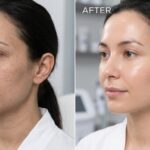

Retinoids are the most studied skin-renewal actives, but January’s dry air and central heating make irritation more likely. You don’t need to abandon retinol—you just need a winter-proof plan.
Why retinoids work (in plain English)
Retinoids encourage orderly cell turnover and influence collagen pathways, which over time softens fine lines and smooths texture. Benefits are cumulative; irritation is optional if you respect dose and frequency.
The winter ramp that actually works
- Weeks 1–2: Apply 1–2 nights/week on buffered skin (moisturiser first, then a pea-sized amount spread thinly).
- Weeks 3–4: Increase to 2–3 nights/week if no persistent sting or flake.
- Weeks 5–6: Consider 3–4 nights/week; many skins don’t need nightly use in cold months.
If redness or stinging persists, step back to the previous frequency for 10–14 days, prioritise hydration, and resume gently.
What not to stack on retinoid nights
Avoid combining with strong acids or gritty scrubs. Keep it boring: cleanse → buffer (optional) → retinoid → moisturiser. On non-retinoid nights, focus on hydration and barrier support.
Pairings that make retinol easier
- Humectants (water-binding serums) under moisturiser.
- Ceramide-rich creams to reinforce the barrier.
- SPF every morning—retinoid glow fades fast if you pick up incidental UV.
How a clinic fits in
A short review helps match retinoid strength to skin type, and time in-clinic facials or K-laser rejuvenation around your active nights so you stay comfortable. The result: a smoother, steadier finish by February without the winter flake.
Need help pacing your retinoid? Book a winter skin review in West Hampstead.