With the beauty and aesthetics industry growing rapidly across the UK, many people find themselves confused about where the line sits between traditional beauty treatments and genuine medical aesthetics. This confusion matters far more than it might initially seem, since understanding the difference between medical aesthetics and beauty treatments directly affects both safety and the results you can realistically expect. At The Wellness and Beauty Clinic, we believe clients deserve clarity on this distinction before choosing where to book any treatment, and this article breaks down exactly what separates the two categories.
Defining Beauty Treatments
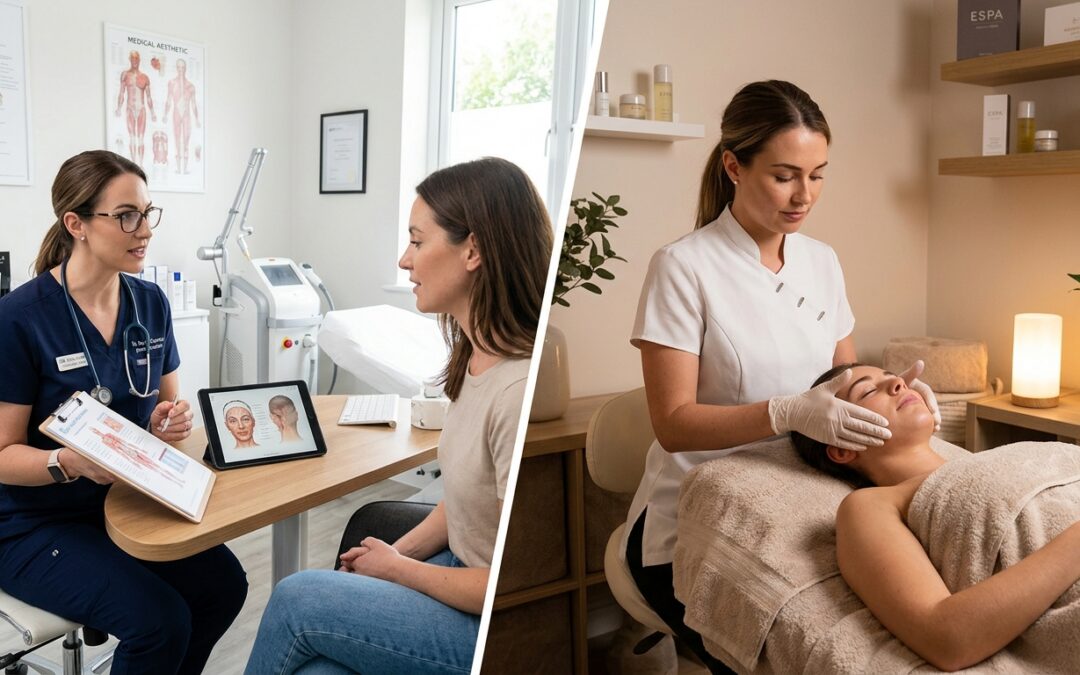
Beauty treatments encompass a broad range of services traditionally offered in salons and spas, generally focused on surface-level enhancement, relaxation, and general skin maintenance.
The Focus on Surface-Level Enhancement
Beauty treatments typically work at the surface level of the skin, addressing concerns such as basic cleansing, exfoliation, and temporary enhancement through services like facials, waxing, and basic skincare application, without penetrating deeper skin layers or addressing underlying structural concerns.
The Relaxation and Wellbeing Element
Many beauty treatments are designed with relaxation and general wellbeing as a central focus, offering a pampering experience alongside any cosmetic benefit, an important and valuable aspect of self-care in its own right, even where clinical results are more limited.
Typical Qualifications Required
Beauty therapists typically hold vocational beauty therapy qualifications, providing them with the skills needed to safely deliver treatments like facials, massage, and basic skincare services, though generally without the medical training required for more invasive or medically significant procedures.
Defining Medical Aesthetics
Medical aesthetics refers to a category of treatments that work at a deeper, more clinically significant level, typically requiring medical or nursing qualifications to perform safely.
Treatments That Penetrate Deeper Skin Layers
Medical aesthetic treatments, including injectables, medical-grade peels, and advanced laser or radiofrequency technology, work beneath the skin’s surface, directly influencing structures like collagen production, muscle activity, or pigment cells at a cellular level.
The Requirement for Medical Training
Because medical aesthetic treatments carry genuine clinical risk, they should only be performed by practitioners with recognised medical qualifications, such as doctors, nurses, or dentists who have undergone specific additional training in aesthetic medicine.
A Focus on Measurable, Longer-Lasting Results
Medical aesthetic treatments are generally designed to produce more significant, measurable, and longer-lasting results compared to traditional beauty treatments, reflecting their more clinically sophisticated mechanisms of action.
Key Differences in Practitioner Qualifications
One of the clearest distinctions between medical aesthetics and beauty treatments lies in the qualifications and training required of the practitioner delivering them.
Medical and Nursing Backgrounds
Practitioners performing medical aesthetic treatments, particularly injectables, should hold recognised medical or nursing qualifications, alongside specific additional training and insurance covering the particular treatments they offer.
Vocational Beauty Therapy Qualifications
Beauty therapists typically complete vocational qualifications specifically focused on beauty therapy, equipping them well for treatments within their scope of practice but not for more medically significant procedures requiring deeper clinical knowledge.
The Importance of Checking Credentials
Regardless of which type of treatment you are considering, it is always worth verifying a practitioner’s specific qualifications and insurance coverage for the exact treatment you are booking, rather than assuming all providers within a clinic hold identical training.
Differences in Regulation and Oversight
The regulatory landscape differs considerably between medical aesthetics and traditional beauty treatments, an important consideration for client safety.
Medical Aesthetics and Clinical Governance
Medical aesthetic clinics are generally expected to operate under stricter clinical governance, including thorough consultation processes, proper medical record keeping, and adherence to guidelines set by relevant professional medical bodies.
The Currently Evolving Regulatory Landscape
The UK aesthetics industry has seen growing calls for stricter regulation, particularly around treatments like dermal fillers, which remain less tightly regulated than many people assume. This makes choosing a genuinely qualified provider even more important given the current regulatory gaps.
Insurance and Liability Considerations
Reputable medical aesthetic providers carry specific professional indemnity insurance covering the treatments they offer, providing an important layer of protection and accountability that clients should always confirm before proceeding with treatment.
Examples of Treatments in Each Category
Understanding specific examples helps clarify where different treatments typically sit within this broader distinction.
Common Beauty Salon Treatments
Facials, waxing, basic exfoliation treatments, eyebrow shaping, and relaxation-focused massage generally fall within the traditional beauty treatment category, focused on surface-level maintenance and general wellbeing.
Common Medical Aesthetic Treatments
Anti-wrinkle injections, dermal fillers, medical-grade chemical peels, laser resurfacing, and advanced skin tightening technologies, such as those covered in our article on skin tightening treatments without surgery, generally fall within the medical aesthetics category given their deeper mechanism of action and associated clinical risk.
Treatments That Sit in a Grey Area
Certain treatments, such as advanced facials incorporating microneedling or chemical peels, can sit somewhere between these two categories, making it particularly important to verify practitioner qualifications when booking treatments that blur this traditional distinction.
Why This Distinction Matters for Anti-Ageing and Pigmentation Concerns
Understanding whether a treatment falls within medical aesthetics or traditional beauty care becomes especially relevant when addressing more complex skin concerns.
Anti-Ageing Treatments Requiring Medical Expertise
Many of the most effective options covered in our guide to the best anti-ageing treatments for women over 40 fall firmly within medical aesthetics, given their deeper mechanism of action and the medical judgement required to deliver them safely and effectively.
Pigmentation Treatments and the Risk of Incorrect Treatment
Because certain pigmentation treatments carry a genuine risk of worsening pigmentation if performed incorrectly, particularly on darker skin tones, our article on how to reduce pigmentation and uneven skin tone emphasises the importance of seeking treatment from genuinely qualified medical aesthetic practitioners rather than less specialised providers.
What a Genuine Medical Aesthetic Consultation Looks Like
Understanding what to expect from a proper medical aesthetic consultation helps clarify the depth of assessment involved compared to a standard beauty treatment booking, a process explained fully in our article on what happens during an aesthetic consultation.
A Thorough Medical History Review
Genuine medical aesthetic consultations include a detailed review of your medical history, current medications, and any relevant health conditions, a level of clinical assessment rarely seen within standard beauty salon bookings.
Honest Discussion of Risks and Realistic Outcomes
A proper medical aesthetic consultation includes clear, honest information about potential risks and realistic expected outcomes, reflecting the greater clinical significance of these treatments compared to more surface-level beauty services.
How to Choose the Right Type of Provider for Your Goals
Deciding between a beauty salon and a medical aesthetic clinic ultimately depends on the specific outcome you are hoping to achieve.
When a Beauty Treatment Is the Right Choice
If your goal is general relaxation, basic skin maintenance, or temporary surface-level enhancement, a qualified beauty therapist at a reputable salon can provide excellent, appropriate care within their scope of practice.
When Medical Aesthetics Is the More Appropriate Option
If you are seeking more significant, longer-lasting results addressing concerns like deeper wrinkles, volume loss, skin laxity, or stubborn pigmentation, medical aesthetic treatment delivered by a properly qualified practitioner is generally the more appropriate and effective route.
The Value of an Honest, Informed Recommendation
A genuinely trustworthy provider, whether in beauty or medical aesthetics, will be honest about whether your specific goals are best served by their own services or might be better addressed elsewhere, rather than simply selling whatever treatments they happen to offer.
Why Choose The Wellness and Beauty Clinic
Our clinic operates firmly within the medical aesthetics space, bringing genuine clinical expertise to every treatment we offer.
Practitioners With Recognised Medical Qualifications
Every practitioner delivering medical aesthetic treatments at our clinic holds recognised medical or nursing qualifications, alongside specific additional training in the treatments they perform, ensuring you receive care from genuinely qualified professionals.
A Thorough, Clinically Grounded Consultation Process
We never compromise on the depth of our consultation process, ensuring every client receives a proper medical assessment before any treatment decisions are made, regardless of how minor a treatment might initially seem.
Transparency About What We Do and Do Not Offer
We are always honest about which of your goals fall within our scope of medical aesthetic practice and which might be better addressed through a different type of provider, prioritising your best interests over simply securing a booking.
Book Your Consultation With Confidence
Understanding the distinction between medical aesthetics and traditional beauty treatments empowers you to make genuinely informed decisions about your care. Visit The Wellness and Beauty Clinic to explore our full range of medical aesthetic treatments and book your personalised consultation.
Frequently Asked Questions
Can beauty therapists perform treatments like anti-wrinkle injections?
No, treatments like anti-wrinkle injections should only be performed by practitioners with recognised medical or nursing qualifications, given the clinical significance and potential risks involved.
Is a medical aesthetic clinic more expensive than a beauty salon?
Generally, yes, reflecting the higher level of practitioner qualification, more advanced technology, and greater clinical significance of the treatments offered, though pricing varies considerably between individual providers.
How can I check if a practitioner is properly qualified?
You can ask directly about a practitioner’s specific qualifications, training, and insurance coverage for the treatment you are considering, and a reputable practitioner will always answer these questions openly and transparently.
Are all clinics offering dermal fillers properly regulated?
Not necessarily. The UK’s regulatory framework around certain treatments like dermal fillers remains less strict than many people assume, making it especially important to verify a practitioner’s medical qualifications independently before booking.
Can I get both beauty treatments and medical aesthetic treatments at the same clinic?
Some clinics, including ours, offer a combination of services, though it is always worth confirming which specific practitioner will be delivering which treatment and their relevant qualifications for that particular service.